Wedding Work

In A Year in Flowers, Erin Benzakein writes that once your friends and family find out that you can arrange flowers, they'll come to you and ask you to do weddings.
That experience happened to me twice this summer! The first wedding I worked on was in June, and I created over thirty centerpieces for the tables. Although I was not using any of my own flowers, it was still an amazing experience. I sourced all the flowers from Metro Flower Market in Chantilly, VA. They have wonderful customer service, and I've found that they are very easy to work with. Just doing the table arrangements was a great way for me to be exposed to the wedding industry, and I loved it.
Creating the arrangements was a two-day process. The first day I conditioned all the flowers, which is an extremely important step to ensure that the flowers stay hydrated during the event. I learned how to cut roses diagonally so that they will hydrate more efficiently. I also learned that hydrangeas soak up water through their blooms, so you place them head down in warm water.


The next day I actually made the arrangements. The client supplied the centerpiece vases and floral foam. I had worked with floral foam before, but not on such a large scale. I ended up experimenting with the first arrangement and spending more time on it in order to find a formula that both the client and I found aesthetically pleasing. After I had established the formula, the rest of the arrangements flowed in a natural rhythm.


All of the finished arrangements took up the entire dining room. It was an amazing sight to walk into. The finished centerpieces went on all the tables at the reception for the wedding.


The second wedding I did this summer was in August. This time I was working with the bride, which was my first time, so I was a little apprehensive. The bride had a very specific color scheme in mind, and none of the flowers I was growing fit into the scheme. I told the bride about Metro Flowers, so we took a trip there so she could see what types of fillers and greenery she liked for her wedding. She ended up ordering the roses - her focal flower- herself from another source, and I was in charge of the rest.
I ordered the flowers from Metro, and was once again very satisfied with their customer service. The pickup was just as smooth as the first time.
I also sourced some local flowers from Fiat Flowers, which my friend owns and runs, in Nokesville, VA. She had told me that she was growing white and apricot lisianthus, both of which fit into the color scheme. They were beautiful flowers, and I was inspired to add lisianthus to my garden wishlist for 2024.


I was in charge of making the bride's bouquet: she wanted a cascading bouquet, the corsages, and the boutonnieres. I was not familiar with how to create a cascading bouquet so I watched multiple videos on the process. The bride also had a picture of what she wanted the bouquet to look like so I studied the image. I had made boutonnieres before, and had all the supplies so I felt confident in that area. I also watched several videos on how to make corsages.
Once again I conditioned all the flowers the day before designing the bouquets. I ended up helping the bride, and her family and friends make the bridesmaids' bouquets. I made one and taught them the process, then they did the rest.

The cascading bouquet that I created was foam free and used the spiral method to create it. I was already familiar with the spiral method, so I chose that option over using floral foam. I used a full length mirror to help me design the cascading bouquet, and checked in with the bride several times. She was able to give input on the bouquet in order that the bouquet was exactly what she wanted.
The ingredients were a crucial part of designing a cascading bouquet. Some of the greenery and flowers have to "bounce." They have to have the natural ability to flow and bend, which creates the aesthetic cascade. I used Italian ruscus for the main "bouncy" greenery/filler. I used the lisianthus to bring flowers into the cascade, as well as baby's breath.

The corsages gave me a bit of a problem. The wire I had wasn't strong enough to bind the flowers and greenery to the bracelet, so I researched different ways to make a corsage. One way was using hot glue, or floral glue; I only had hot glue available. The hot glue actually worked really well, and I loved the finished product.

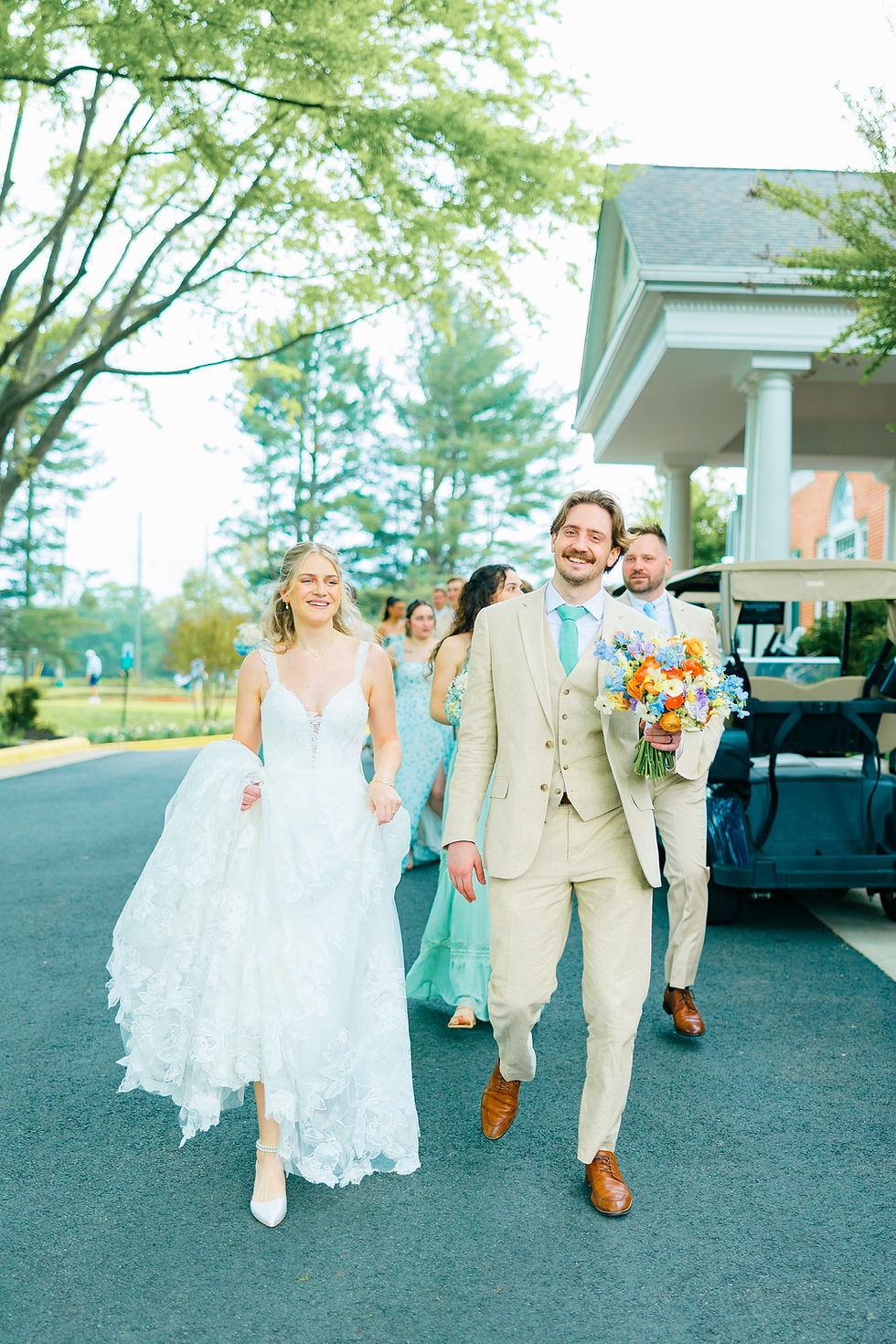
On the morning of the wedding I wrapped the bridal bouquet and all of the bridesmaid's bouquets in ribbon. Then I wrapped them in tissue paper to protect them while they traveled and placed them in boxes I saved from the Metro flowers.

Overall I am so glad I was able to begin wedding work! Both of the weddings were great experiences and I definitely grew in my knowledge of floristry. I am hoping to do many more weddings in the future!


Comments